
I watched 50 First Dates years ago. I had no idea it was about AI.
Every morning, your AI meets your app for the first time. Here's the videotape and the journal that fix it.
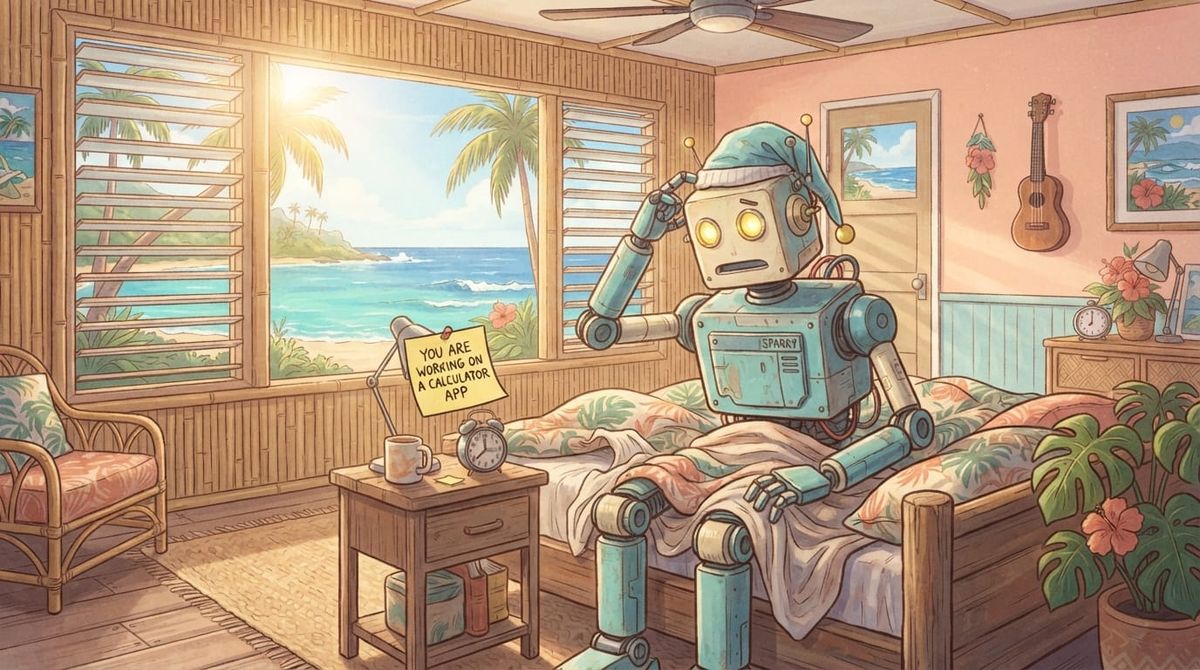
When I first watched 50 First Dates, I thought it was a romantic comedy with Adam Sandler, Drew Barrymore and a lot of Hawaii.
Twenty years later, after a few thousand hours coding with AI, I realised it's actually a documentary.
Quick recap for those who missed it: Lucy has a car accident and from that day she can't form new memories. Every morning she wakes up convinced it's the same Sunday as before the crash. Henry falls in love with her and has to win her over again. Every. Single. Day.
Now replace Lucy with your AI coding assistant and Henry with you. Same plot, fewer sunsets.
(If you're new here: last time we saw why an app built with AI becomes impossible to change. Today we look at one of the main reasons, and how to fix it.)
Problem one: every morning is the first date
Every new session, your AI meets your app for the first time. It doesn't remember yesterday's conversation, why you picked that database, or the three hours you spent explaining that the logic does not go in the View.
So it does what anyone on a first date does: it improvises. Brilliantly, confidently and differently every time.
- On Monday it manages your app's data one way.
- On Wednesday, new session, it finds "a cleaner way".
- On Friday it introduces a third one, because you asked it to "keep things simple".
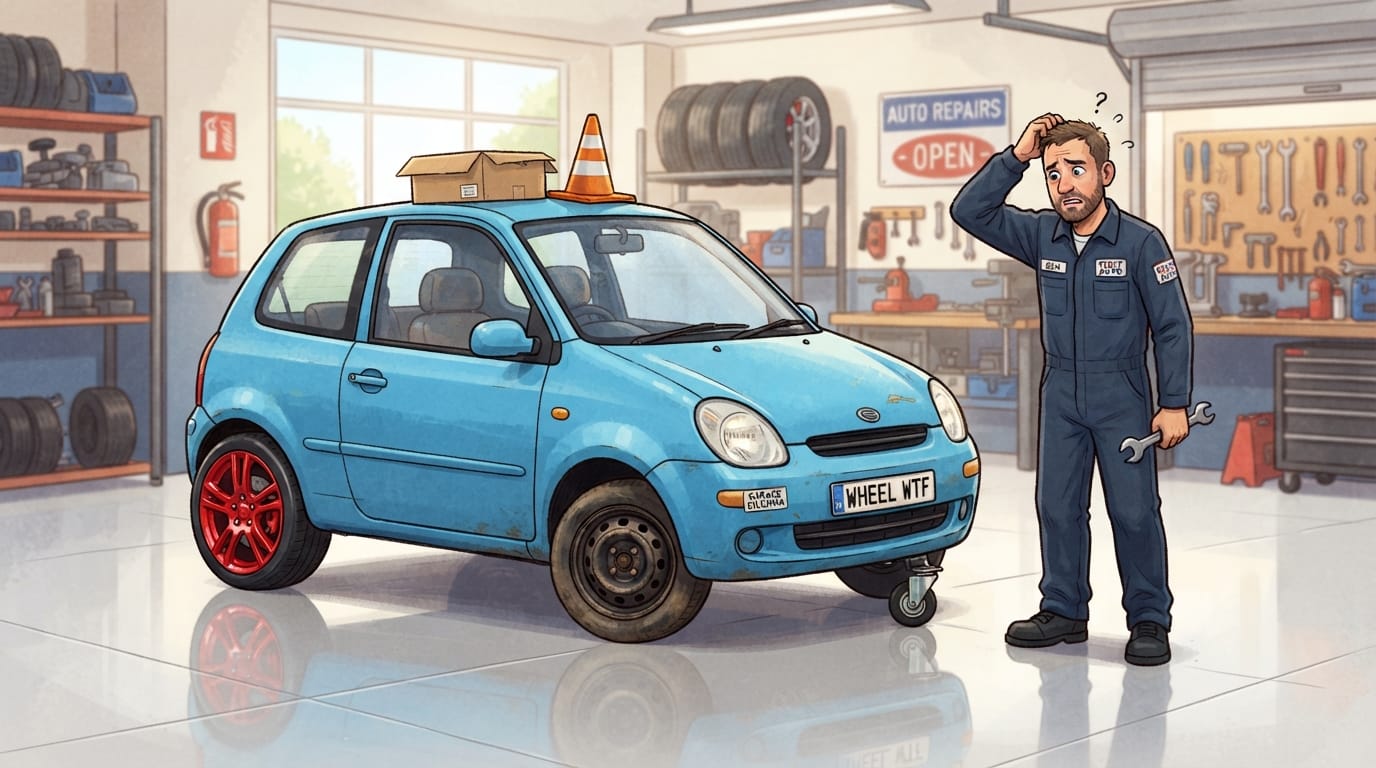
Each change works. Together, they make a car with one wheel from a Fiat, one from a Ferrari and one from a shopping trolley. Technically it moves. You wouldn't take it on the motorway, and you definitely wouldn't take it on a date.
Problem two: it forgets the plan before dinner
Here the AI does even worse than Lucy. Lucy at least remembers everything until bedtime. Your AI, in a long session, starts losing the plot around lunchtime.
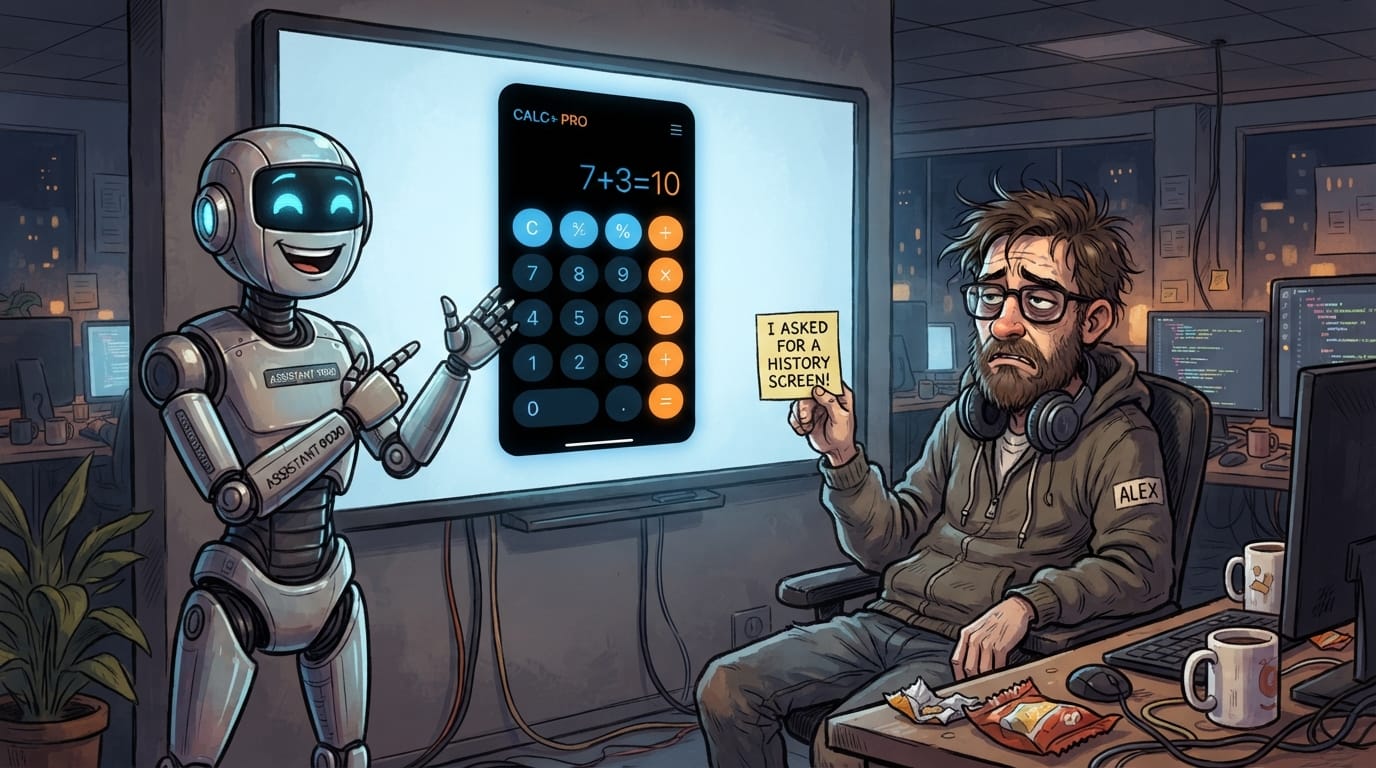
You start with a clear goal: "add a history screen to the calculator". An hour and forty messages later, the AI is refactoring the number formatting, renaming three files and suggesting a dark mode. Nobody asked for a dark mode. The history screen is still not there.
It's not malice. The original request is just buried under everything that came after, like your first message in a group chat after 200 replies about where to have dinner. The AI still technically "sees" it. It just stopped caring.
Henry's solution: the videotape
In the film, Henry finds a fix: a videotape Lucy watches every morning. It tells her what happened, who he is and why there's a stranger in her kitchen making waffles.
Your app needs the same thing: a short rules file the AI reads at the start of every session. Claude Code reads CLAUDE.md, many tools read AGENTS.md, Cursor has project rules, Copilot has its instructions file. Different names, same videotape.
For the calculator from the first article:
# Calculator — watch this first

## What this is
A calculator for iOS. SwiftUI.

## Where things live (don't move them)
- Calculator: all the math. No UI.
- CalculatorViewModel: connects math and screen. No math.
- CalculatorView: shows things. That's it.

## Always
- Decimal, never Double (0.1 + 0.2 must be 0.3).
- Run the tests before saying "done".

## Never
- No new libraries without asking.
- No logic in the View. Not even "just this once".
- Don't rewrite working code to make it "cleaner".
Fifteen lines, ten minutes. The AI still wakes up with no memory, but now there's a tape by the bed.

Keep it short. A 40-page rules file is like a three-hour videotape: Lucy would fall asleep before the important part, and so does the AI. The important rules get lost among the irrelevant ones, and the AI follows the irrelevant ones with touching devotion.
Lucy's solution: the journal
Later in the film Lucy starts keeping a journal: not who she is, but what she's doing and why.
That's the second document: the spec for the task you're working on right now. The rules file is permanent; the spec changes with every job. Three lines are enough:
## Task: history screen
Goal: show the last 20 calculations, newest first.
Done when: the list appears, survives an app restart, tests pass.
Out of scope: dark mode, formatting changes, anything else "while we're at it".
That last line is the most important one. "Out of scope" is the AI equivalent of telling a mechanic "just the oil change, please". You know he'll find something else to fix. At least now it's in writing.
Three habits for keeping the AI on track
- One session, one task. When the task is done, close the session and start fresh. Long sessions are where the plot gets lost. New task, new first date, same videotape.
- Make it repeat the goal. Before writing a single line, ask: "Tell me in two sentences what we're doing and when it's done." If the answer mentions a dark mode, you just saved an afternoon.
- Check against the spec, not the vibe. At the end, don't ask "does it work?". Ask "does it do what the spec says, and nothing else?". You'd be amazed how often "nothing else" is the part that fails.
The tape is not a guarantee
One honest note: the AI follows the rules file most of the time. Most of the time is not always. That's why last time we talked about tests, the dyno that measures the engine on the bench instead of on the motorway. The videotape tells the AI how things should be; the tests check that they are. Romance is nice, but trust, then verify.
The end
I still think 50 First Dates is a nice film. I just watch it differently now. When Henry hits play on that videotape every morning, I don't see a love story anymore.
I see a man who finally wrote a decent CLAUDE.md.